Your Glutes Are Sleeping On The Job. Here's Why Glute Activation Matters
Five minutes of glute activation work can go a long way. Here's why.

August 24, 2018 - Updated July 21, 2026
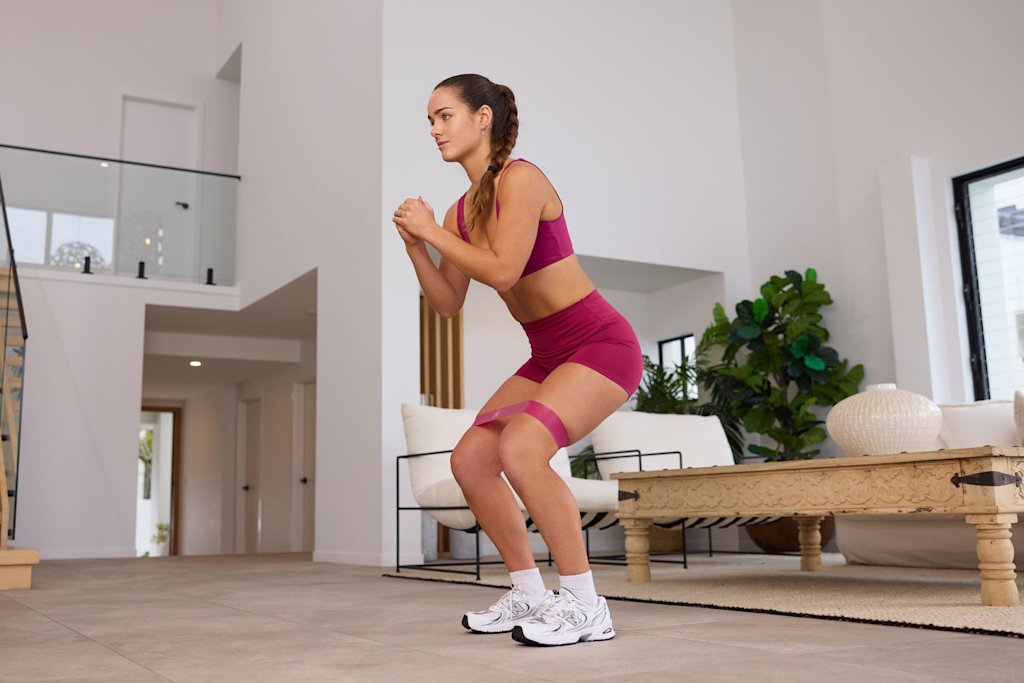
You can do all the squats, deadlifts and hip thrusts in the world and still not really work your glutes to their full potential. Not because your form is off, but because your glutes aren't coming to the party and other muscles are having to pick up the slack.
This is a super common experience. You finish leg day with sore quads, a tight lower back and glutes that feel like they barely showed up, yet you were doing all the right "glute exercises". That's usually not a sign you need to go heavier. It's a sign your glutes aren't doing enough of the work, and something else has stepped in to cover for them.
Here's why glute activation matters before you start your next lower body session, what's causing your glutes to check out, and how to tell whether it's happening to you.
What is glute activation?
Glute activation means doing a few targeted exercises before your workout to wake up your glute muscles so they are properly engaged once you start training. Think of it as a focused warm-up. It primes your lower body for the movement ahead (especially important if you work a desk job or spend a lot of time sitting down) and strengthens the connection between your brain and your backside.
Your glutes aren't one muscle, they're three. The gluteus maximus is the big one behind power and shape, and it drives every hip extension movement you do: squats, deadlifts, hip thrusts, running, standing up off the couch. The gluteus medius and minimus are smaller and handle stability, especially when you're on one leg.
All three need to be firing together for you to get the most out of your training. When they're not, the rest of your body (like your quads and lower back) rushes in to help.
Why glute activation is important
Two reasons, and the second one is the bigger deal.
You get more out of every session. Your glutes are among the largest, strongest muscles you own. If they're not engaging properly for every glute exercise in your workout, your quads and lower back pick up the slack, which means you're working hard but not actually working your glutes that hard. ACE points out that the glutes respond well to direct, intentional training, and activation is the simplest version of that.
You protect the rest of your body. The bigger reason we want you to make time for glute activation is to protect the rest of your body from injury. Your glutes stabilise your pelvis and control your hips and knees during almost every movement you make. When they're weak or underactive, other muscles and joints start absorbing load they weren't built for. That's when you start to get aches, tight muscles and lower back pain.
A 2019 systematic review found that people with low back pain tend to show reduced gluteus medius strength and altered hip muscle recruitment compared to people without it, and a 2015 study in the European Spine Journal found gluteus medius weakness was significantly more common in people with chronic low back pain than in healthy controls.
To be clear, that's an association, not direct proof that weak glutes caused the pain. The knee picture is similarly murky. Women with patellofemoral pain often do show weaker hip abductors, but studies following people over time haven't consistently shown weak glutes predict who develops it.
So we won't tell you activation is a guaranteed way to prevent injury. What we will say is that strong, well-engaged glutes help you move better, lift using the correct muscles, and feel more stable. Common sense really, and that's reason enough for five minutes of activation work.
What causes your glutes to switch off?
The short answer is sitting. Most of us spend a big chunk of the day seated at a desk, in the car, or on the couch, and this big muscle stops firing as efficiently as it should.
Sitting also shortens your hip flexors. When the muscles at the front of your hip are tight, they can dampen the signal to the muscles on the opposite side, which is your glutes. We love that the Cleveland Clinic describes it as "dead butt," when one group of muscles overworks while another group does almost nothing.
Then there's habit. If your glutes aren't used very much, they're slow to switch on, your body finds a workaround, and that workaround becomes your default. You keep training, you keep getting stronger quads, and your glutes keep taking a backseat.
Six signs your glutes aren't pulling their weight
The common signs are easy to spot yourself - either by paying attention to how you feel or watching your form in a mirror.
Your quads dominate everything. Squats, lunges, leg press: you're feeling all of them in your front of thigh, never your glutes.
Your lower back is sore after leg day. Many lower-body exercises (like deadlifts) work your lower back, but that shouldn't be where you feel it most. If you feel lower back pain during your workout or in the days after, that's a red flag.
You can't feel your glutes working, even in glute exercises. You do a glute bridge, a split squat, or a cable kickback, and you can't feel much happening in your glutes.
Your knees drift inward as you stand up out of a squat, or you notice knee discomfort when you squat.
Your glutes aren't getting stronger. You're consistently strength training, but you don't feel like you're making the strength gains to increase your weights.
One side feels stronger than the other, or your hips don't feel level when you run.
One or two of these isn't a diagnosis. It's not an injury. It's just a nudge to spend a few minutes on activation before your next session.
Where to start
If glute engagement is feeling like an issue, it doesn't require a program overhaul. A few minutes before your lower body sessions is enough to start building the connection.
A simple rotation of exercises to start with is a bridge, a side-lying clam and a banded lateral walk, done slowly, before you touch any heavier weights. You can rest your hands on your glutes throughout to check they're engaging. We've put together the full set in our guide to glute activation exercises, including a five-minute warm-up you can follow.
Then keep training them properly. Activation wakes your glutes up, but doing strength work with great form is what makes them stronger. Finish with a few glute stretches and you've covered all your bases.
A more empowered you starts with Sweat, and our editorial team is here to bring you the latest fitness tips, trainer recommendations, wellbeing news, nutritional advice, nourishing recipes and free workouts.
* Disclaimer: This blog post is not intended to replace the advice of a medical professional. The above information should not be used to diagnose, treat, or prevent any disease or medical condition. Please consult your doctor before making any changes to your diet, sleep methods, daily activity, or fitness routine. Sweat assumes no responsibility for any personal injury or damage sustained by any recommendations, opinions, or advice given in this article.
Fitness