Leg Extension Alternatives For Every Home Or Gym Setup
No access to a leg extension machine? Here's what muscles it targets and six effective alternatives, whatever equipment you've got.

July 22, 2026 - Updated July 22, 2026
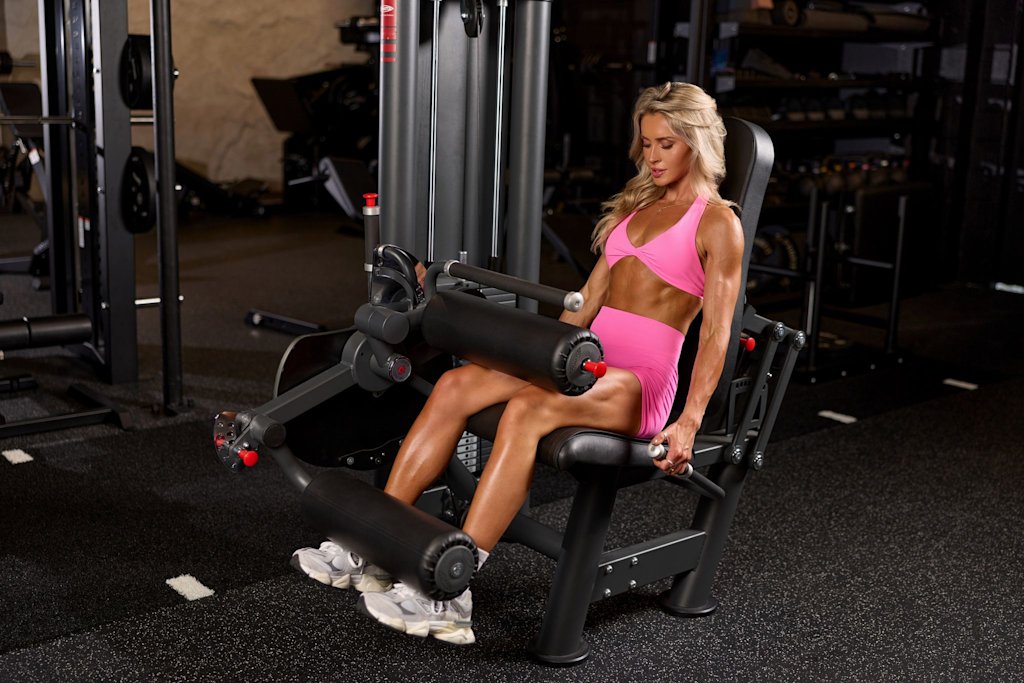
Maybe your gym doesn't have a leg extension machine. Maybe there's always a queue for it. Or maybe you train from home and machines aren't even part of the picture. Whatever the reason, you don't need one to build strong, capable quads. There are plenty of alternatives that target the same muscles, and some of them actually come with a few added benefits the machine can't offer.
What muscles does the leg extension actually work?
The leg extension is a quad isolation exercise. That means it targets the muscles on the front of your thigh, specifically the four muscles that make up the quadriceps: the rectus femoris, vastus lateralis, vastus medialis and vastus intermedius. These muscles work together to straighten your knee, which is why the leg extension involves nothing more than extending your leg against resistance while seated.
It's a useful exercise for building quad strength and size, particularly for people rehabbing a knee injury or wanting to isolate the quads without other muscles taking over. The trade-off is that it's a single-joint, machine-based movement rather than a compound exercise. Most of the alternatives below work your quads through a full range of motion, and a few bring your glutes, hamstrings and core into play too, which tends to carry over better to everyday movement and other exercises.
Bodyweight: Bulgarian split squats
If you've got nothing but floor space and a bench or chair, Bulgarian split squats are one of the most effective quad exercises you can do. Stand a couple of steps in front of a bench, rest one foot on it behind you, then lower your front knee toward the ground and push back up. When it starts to feel easy, level up by adding dumbbells.
This one tends to feel harder than it looks, and that's the point. Because you're working one leg at a time, your quads have to do the work without the other leg helping out. It also improves balance and stability, something a seated machine simply can't offer.
With split squats, the angle of your torso can change the muscle focus completely. In the video above, Kayla is leaning forward more, which shifts the focus into the glutes. If you want to keep the focus on your quads, the trick is to simply keep your torso upright as you lower down.
Bodyweight isolation: Reverse Nordic curls
If you specifically want a quad isolation exercise that doesn't need any equipment, the reverse Nordic curl is about as close as it gets to the leg extension. Kneel on a cushioned surface, sit back slightly with your hips extended, then slowly lean your torso backward from the knees, keeping a straight line from your head to your knees, and use your quads to control the movement back up.
This one is deceptively challenging (even more so than split squats), so start with a small range of motion and build from there. It loads the quads through a lengthened position, which the leg extension doesn't do, and for many people, that makes it a valuable addition rather than just a substitute.
Advanced bodyweight: Sissy squats
The sissy squat is another quad-focused move worth trying once you've built up some strength and control. Holding onto something stable for balance, rise onto the balls of your feet (or elevate your heels with a plate or angled platform), then bend your knees and lean back as you lower down, keeping your hips extended, before pushing back up through your quads.
It's a pretty demanding exercise on the knees and quads, so it's best suited to people who already have a solid strength training base. If it feels like too much load right now, the Bulgarian split squat or goblet squat (below) are gentler places to start.
12 REPS
Dumbbells: Goblet squats
If you've got access to a single dumbbell or kettlebell, the goblet squat is a really solid option that features in heaps of Sweat programs. Hold the weight close to your chest, feet shoulder-width apart, and squat down until your thighs are roughly parallel to the floor.
Holding the weight at your chest naturally keeps your torso upright, which helps you sit deeper into the squat and really load up the quads. If you find your heels want to lift or you're not getting the depth you're after, try elevating your heels on a weight plate. This shifts more of the work onto your quads and often makes the movement feel more comfortable, especially if you've got tighter ankles.
It's an easy exercise to scale either way, so it works whether you're new to strength training or you've been at it for years (in which case, grab a heavy dumbbell!).
Resistance bands: Seated leg extensions
Training at home without weights? A resistance band can replicate the leg extension itself. Loop a band over your feet, sit on a chair or bench with your feet flat on the floor, then lift one foot and extend your knee against the band's resistance.
This gives you a genuine like-for-like alternative, isolating the quad in a similar way to the machine, just with adjustable, portable resistance. It's harder to increase the load with just a band, but it's a handy option if you're a beginner or building strength back up after a knee injury and want to keep the movement simple and controlled.
Gym machine alternative: Leg press
Still want a machine-based option? The leg press is a solid substitute. Sit back in the machine, feet flat on the platform, and push through your heels to extend your legs.
Unlike the leg extension (an isolation exercise), the leg press is a compound movement that works multiple muscle groups at once, including your quads, glutes and hamstrings. For many people, that actually makes it a more efficient use of gym time when the leg extension machine is taken.
Building strong quads, whatever your setup
The leg extension machine isn't the only way to build strong quads, and depending on your goals, it might not even be the best one. Whether you're working with a bench, a single dumbbell, a resistance band, your own bodyweight or a different machine altogether, each of these alternatives will get your quads working hard. Pick the one that suits your equipment, your experience level and your goals, and build from there.
Erin is a writer and editor at Sweat with years of experience in women's publishing, the fitness industry, media and tech. She's passionate about the power of movement, and you can often find her on a yoga mat, a hike, a dance floor, in the ocean or the gym.
* Disclaimer: This blog post is not intended to replace the advice of a medical professional. The above information should not be used to diagnose, treat, or prevent any disease or medical condition. Please consult your doctor before making any changes to your diet, sleep methods, daily activity, or fitness routine. Sweat assumes no responsibility for any personal injury or damage sustained by any recommendations, opinions, or advice given in this article.
Fitness